

- Published by:
- Victorian Independent Remuneration Tribunal
- Date:
- 30 Oct 2026
Message from the Chair
Dear Minister
During financial year 2025–26, the Tribunal undertook work on the remuneration arrangements for the following occupational groups: councillors in local government, Members of Parliament and executives employed in the Victorian Public Service and public entities.
In relation to local government, following correspondence from the Tribunal, the then-Minister for Local Government wrote to the Tribunal in February 2026 requesting that the Tribunal make a new comprehensive determination for local government councillors, mayors and deputy mayors. This was an important initiative because it brought local government into line with the other groups within the Tribunal’s jurisdiction who have a statutory entitlement to a comprehensive review of their remuneration arrangements every four years.
The end of the financial year saw the completion of very extensive groundwork — including inviting submissions from all those affected by the determination, an online questionnaire and meetings and roundtables with a wide range of stakeholders including peak bodies and government agencies — ahead of the determination being made in August 2026.
In addition to its local government work, in 2026 the Tribunal also made annual adjustment determinations for MPs, VPS executives and public entity executives. The Tribunal had also delivered its 2025 annual adjustment determinations for VPS and public entity executives in the 2025–26 financial year.
Although all of the matters the Tribunal is required to consider under its legislation were weighed carefully, the Tribunal was mindful of the broader impact of its decisions. Thus, particular weight was given to the Government’s Wages Policy and current and projected economic conditions and trends, in seeking to find the right balance between wages fairness for the occupational groups within the Tribunal’s jurisdiction and the need for restraint dictated by the prevailing economic circumstances.
Balancing these factors, in its 2026 annual adjustment determinations, the Tribunal decided to increase the notional salary component of the remuneration bands for VPS and public entity executives by 3.5 per cent and to increase the basic salary for MPs by a similar amount of 3.5 per cent bringing it to $219,391 per annum.
In relation to MPs, the Tribunal is also responsible for issuing guidelines relating to the use of work-related parliamentary allowances and the Electorate Office and Communications Budget. In response to matters raised by MPs and others, the Tribunal undertook a review of the guidelines. As a result, it issued new guidelines in October 2025 which included changes to eligibility arrangements for the parliamentary accommodation sitting allowance and the introduction of a new framework enabling reasonable adjustments for Members with disability through waiver or modification of specific guidelines.
From time to time the Tribunal may undertake ‘own-motion’ reviews and analysis of public sector remuneration trends in relation to any specified occupational group.
In 2024, the Tribunal commenced a research project examining the Employee Value Proposition (EVP) of executive roles in the Victorian public sector. For the purposes of this project, EVP was defined as ‘the monetary and non-monetary factors associated with a job that are taken into account by employees when deciding whether to accept or stay in a job’.
The Tribunal considered that understanding the EVP of executive roles is critical to maintaining a high performing Victorian public sector. This includes informing the Tribunal’s work in setting remuneration bands, and when advising on proposals to pay an executive above the band. The Tribunal also expects that its findings will assist public sector organisations to optimise employment offers, and to attract, retain and motivate executives.
The Tribunal’s report on EVP, including its findings, was published in September 2025.
This financial year was the fifth full year of the operation of the payment above the band process. Under the Victorian Independent Remuneration Tribunal and Improving Parliamentary Standards Act 2019 (Vic), if an employer proposes to pay an executive above the maximum of the relevant remuneration band, the employer must first seek and consider the advice of the Tribunal. However, the employer is not bound to accept the Tribunal’s advice.
In providing advice, the Tribunal strives to protect the integrity of the overall remuneration structure and at the same time recognise that there may be circumstances where prevailing market conditions justify a departure from the standard structure.
Over the course of the year, the Tribunal provided advice in response to requests from public sector employers — mainly in the transport infrastructure and financial sectors — to pay a total of 21 executives above the maximum of the relevant band. Based on the latest available data, this represented less than one per cent of the total number of executives employed in the Victorian public sector and covered by the Tribunal’s determinations. Thus, it is pleasing to be able to again report that the remuneration bands determined by the Tribunal appear to be appropriate for the vast majority of executives.
During the year the Tribunal surveyed MPs, local government mayors and deputy mayors, and public sector employers about their level of satisfaction with the Tribunal’s delivery of its outputs. The overall level of satisfaction was 90 per cent against a target of 80 per cent — a significant increase on the previous financial year.
Finally, I would like to acknowledge Mr Greg Wilson’s contribution to the Tribunal as a Member between July 2024 and December 2025. Mr Wilson’s contributions — always anchored in the real world — were highly valued by the Tribunal. The Tribunal welcomed Ms Meredith Sussex who joined as a Member in December 2025, replacing Mr Wilson. Ms Sussex is a highly respected specialist in public policy, administration and planning with extensive experience at the local, state and national level. We look forward to working with her.
On behalf of the Tribunal’s Members, it is my pleasure to submit this report to you.
Yours sincerely
Warren McCann
Chair
Victorian Independent Remuneration Tribunal
30 September 2026
Abbreviations and glossary
| Term or abbreviation | Definition |
|---|---|
| AO | Administrative Office |
| CEO | Chief Executive Officer |
| CPI | Consumer Price Index |
| DTF | Department of Treasury and Finance |
| EO&C Budget | Electorate Office and Communications Budget |
| EVP | Employee Value Proposition |
| FMA | Financial Management Act 1994 (Vic) |
| FWC | Fair Work Commission |
| MP | Member of the Parliament of Victoria |
| NMW | National Minimum Wage |
| PE | prescribed public entity |
| PESES | Public Entity Senior Executive Service |
| SES | Senior Executive Service |
| SG | Superannuation Guarantee |
| VIRTIPS Act | Victorian Independent Remuneration Tribunal and Improving Parliamentary Standards Act 2019 (Vic) |
| VPS | Victorian Public Service |
| Wages Policy | Wages Policy and the Enterprise Bargaining Framework |
1. About the Tribunal
The Victorian Independent Remuneration Tribunal provides transparent, accountable and evidence-based decision-making in relation to the remuneration of Members of the Parliament of Victoria (MPs), Victorian public sector executives, and local government mayors, deputy mayors and councillors (collectively, councillors).
The Tribunal is established under the Victorian Independent Remuneration Tribunal and Improving Parliamentary Standards Act 2019 (Vic) (VIRTIPS Act).
The Minister responsible for the Tribunal at 30 June 2026 was the Minister for Finance. In performing its functions, the Tribunal must act independently and impartially, and is not subject to the control or direction of any person, including the Minister.
For further information, or copies of the Tribunal documents referenced in this report, please consult the Tribunal’s website.
1.1 Functions of the Tribunal
The VIRTIPS Act (s. 6(1)) requires the Tribunal to inquire into and make determinations in relation to:
- allowances for councillors
- salaries and work-related parliamentary allowances for MPs
- remuneration bands for executives employed in Victorian Public Service (VPS) bodies
- remuneration bands for executives employed in prescribed public entities (PEs).
Amongst other functions, the VIRTIPS Act also provides the Tribunal with powers to:
- make guidelines with respect to the use of particular work-related parliamentary allowances and the Electorate Office and Communications Budget (EO&C Budget) for MPs (VIRTIPS Act, s. 36(1))
- issue guidelines with respect to the placement of public sector executives within the remuneration bands determined by the Tribunal (VIRTIPS Act, ss. 6(1)(e), 6(1)(h), 36(6))
- advise on proposals to pay executives above the relevant remuneration band set by a determination (VIRTIPS Act, ss. 6(1)(i), 37(1))
- provide advice to the Minister on any matter relating to the remuneration of any specified occupational group (VIRTIPS Act, s. 6(1)(l)).
1.2 Tribunal Members
The Tribunal consists of up to three Tribunal members.
Warren McCann – Tribunal Chair
Mr McCann has an extensive public service career.
His career spans senior appointments in Victoria, South Australia and at the Commonwealth, including as Chief Executive Officer of the South Australian Department of Premier and Cabinet, Commissioner for Public Sector Employment in South Australia, and as Secretary of the former Victorian Departments of Justice and Human Services.
His previous roles include Chair of the Judicial Entitlements Panel of Victoria and Special Advisor to the Victorian Department of Premier and Cabinet’s Office of Public Sector Executive Remuneration.
Mr McCann is a Fellow of the Australian Institute of Public Administration.
Mr McCann has been a Member and Chair of the Tribunal since its inception.
Laurinda Gardner – Tribunal Member
Ms Gardner is a board director, organisational reform and change management consultant, and career coach. She has over 25 years’ senior executive experience and was formerly a Deputy Secretary with the Victorian Department of Treasury and Finance, and a Director at the City of Melbourne. Ms Gardner has led large operational teams in diverse areas including strategic and business planning, HR, IT, communications, town planning, stakeholder engagement, finance and risk.
Ms Gardner has performed the role of trusted adviser to several Chief Executive Officers, was an Administrator at the City of Greater Geelong, and is a member of several remuneration, and audit and risk committees.
Ms Gardner commenced as a Member of the Tribunal in September 2022.
Meredith Sussex AM – Tribunal Member
Ms Sussex is a highly respected specialist in public policy, administration and city planning, with extensive experience at a local, state and national level. She has a strong commitment to effective community engagement in the development and implementation of public policy.
Ms Sussex has served on a wide range of boards over the course of her career, including the Port of Melbourne and Development Victoria, and is currently a Deputy Chancellor of La Trobe University.
Ms Sussex has held many senior Victorian public sector positions, including Chair of the Fishermans Bend Development Board, Administrator at Brimbank City Council, Coordinator General of Infrastructure, and Deputy Secretary roles at the Department of Education and at the Department of Premier and Cabinet. She also led the Office of Commonwealth Games Coordination, which was responsible for delivering the Melbourne 2006 Commonwealth Games, and was awarded Membership of the Order of Australia for that work in 2007.
Greg Wilson – Tribunal Member until December 2025
Mr Wilson has extensive experience in public policy, governance, and financial management.
Mr Wilson’s previous roles include Secretary of the Department of Justice and Regulation, Secretary of the Department of Sustainability and Environment, and Deputy Secretary of the Policy and Cabinet Group at the Department of Premier and Cabinet. He also previously served as Chair of the Essential Services Commission, the Country Fire Authority, and Victoria’s State Emergency Service.
Mr Wilson served as a Member of the Tribunal from July 2024 to December 2025.
The Tribunal thanks Mr Wilson for his many contributions as a Tribunal Member and wishes him all the best in his future endeavours.
1.3 Annual report requirements
The VIRTIPS Act specifies that the Tribunal is to prepare, as soon as practicable after the end of each financial year (and no later than 31 October), an annual report to the Minister about the following activities in the previous 12 months (VIRTIPS Act, s. 40):
- information about the number of determinations made by the Tribunal
- details of any disclosure of an interest recorded in the minutes of a meeting of the Tribunal under section 14(4) of the VIRTIPS Act
- a review of the operations of the Tribunal, including the work undertaken by the Tribunal
- the number of MPs who have not complied with requests for further information by the Compliance Officer in the preceding year in relation to determinations about separation payments
- the number of appeals heard by the Compliance Officer in the preceding year in relation to separation payments and the outcome of the appeals
- the number of MPs who have not complied with requests for further information by the Compliance Officer in the preceding year in relation to appeals relating to work-related parliamentary allowances and the EO&C Budget
- the number of appeals heard by the Compliance Officer in the preceding year in relation to appeals relating to work-related parliamentary allowances and the EO&C Budget and the outcome of the appeals
- a report on the performance of the function of the Compliance Officer
- any other prescribed matter.
Those matters are addressed in this report.
2. Review of operations
In 2025–26, the Tribunal undertook work on the remuneration arrangements for the following occupational groups:
- councillors in local governments
- MPs
- executives employed in VPS bodies and PEs.
2.1 Mayors, deputy mayors and councillors
The Tribunal is responsible for setting the value of the allowances payable to councillors in all 79 local governments in Victoria (VIRTIPS Act, s. 23A).
The comprehensive determination in effect during 2025–26 was the Allowance payable to Mayors, Deputy Mayors and Councillors (Victoria) Determination No. 01/2022. Annual adjustments to the values set in that Determination were made in 2022, 2023, 2024 and 2025.
(note - The term ‘comprehensive determination’ refers to a determination in which the Tribunal is required to comprehensively review the existing remuneration arrangements for the relevant occupational group).
In February 2026, the then-Minister for Local Government wrote to the Tribunal to request that it make a new comprehensive determination. The Tribunal commenced work on the Allowance payable to Mayors, Deputy Mayors and Councillors (Victoria) Determination No. 01/2026.
As of 30 June 2026, the Tribunal had:
- published notice of its intention to make a determination on its website on 4 March 2026, which included details about the proposed determination
- commenced consultation, including by providing any affected person or a class of affected persons a reasonable opportunity to make a submission in relation to the proposed determination.
The notice of intention invited parties to make a submission on:
- the roles of mayors, deputy mayors and councillors, including changes to these roles since 2022
- current allowances, including whether the current values are appropriate and what factors should be considered in setting new values
- allowance categories, including the number of categories and the criteria used to allocate councils to specific categories
- relevant comparator roles, including councillors in other jurisdictions
- matters related to the expenses, resources and facilities provided to councillors
- any other matter that the Tribunal should consider.
Written submissions closed on 2 April 2026, with a total of 24 submissions received. A further four individuals made a verbal submission to the Tribunal.
Councillors were also invited to provide their views via an online questionnaire that was emailed to them. A total of 206 responses were received, which is approximately 32 per cent of the elected councillors covered by the Determination.
The Tribunal met with individuals and groups, including peak bodies and governance agencies, to discuss various issues — and with some submitters to further explore issues raised in their written submissions. The Tribunal also convened several ‘roundtable’ discussions with administrators and municipal monitors appointed to councils (currently, or from time-to-time), and a representative group of council chief executive officers (CEOs).
The Tribunal made the new Determination on 18 August 2026.
2.2 Members of Parliament
The Tribunal is responsible for inquiring into and setting the value of salaries, work‑related parliamentary allowances, and the EO&C Budget provided to MPs (VIRTIPS Act, ss. 6(1)(a)-(c)). It may also make guidelines with respect to the use of certain work-related parliamentary allowances and the EO&C Budget (VIRTIPS Act, s. 36(1)).
2025 guidelines update
The guidelines in force at the start of the financial year were the Members of Parliament (Victoria) Guidelines No. 02/2024.
In 2025–26, the Tribunal undertook a targeted review of the MP Guidelines, to respond to several emerging issues and matters raised by stakeholders.
In July 2025, the Tribunal sent a consultation paper to key stakeholders and invited submissions.
The Tribunal completed its review in October 2025 and published the Members of Parliament (Victoria) Guidelines No. 01/2025, which took effect on 13 October 2025 and replaced the previous guidelines.
The principal changes related to:
- eligibility for the parliamentary accommodation sitting allowance, including revised evidentiary and home base requirements and a transitional arrangement for existing claimants
- the introduction of a new framework enabling reasonable adjustments for Members with disability through waiver or modification of specified guidelines
- allowing MPs to claim the commercial transport allowance after late-night sittings of the Parliament, to avoid them having to drive while fatigued
- requiring communication materials funded using an MP’s EO&C Budget to bear the name of the MP’s electorate.
The Tribunal intends to undertake another review of the MP Guidelines in making the next comprehensive determination of salaries and allowances for MPs in 2027.
2026 annual adjustment determination
The comprehensive determination in effect during 2025–26 was the Members of Parliament (Victoria) Determination No. 01/2023 — the Tribunal’s second comprehensive determination of MP salaries and allowances.
The Tribunal is required to make determinations providing for an annual adjustment to the values set in the comprehensive determination (VIRTIPS Act, s. 18). The Tribunal previously made an annual adjustment determination in June 2025.
On 22 June 2026, the Tribunal made the Members of Parliament (Victoria) Annual Adjustment Determination 2026. This Determination adjusted the values of MP salaries, work-related parliamentary allowances and the EO&C Budget with effect from 1 July 2026.
Consistent with legislative requirements, in March 2026 the Tribunal published a notice of its intention to make the Determination and invited submissions on it.
In making the Determination, the Tribunal was required to consider the Government’s Wages Policy and the Enterprise Bargaining Framework (Wages Policy) in operation at that time, the financial position and fiscal strategy of the State, current and projected economic conditions, and any stakeholder submissions (VIRTIPS Act, s. 24(2)).
The Tribunal gave weight to the current Wages Policy in light of the current fiscal strategy of the State of Victoria. Stakeholders who had expressed a view on the value of salaries and allowances advised that increases should be limited to either the current or previous Wages Policy.
In its decision, the Tribunal noted available data on economic growth as well as movements in wages and prices. The Tribunal also noted the Fair Work Commission’s (FWC) decision to increase the National Minimum Wage (NMW) and minimum pay rates under modern awards. From 1 July 2026, most modern award rates increased by 4.75 per cent (FWC (2026), p. 2.). The Tribunal also considered recent remuneration adjustments for MPs in other Australian jurisdictions.
Ultimately, the Tribunal increased the basic salary for MPs, and the additional salary and expense allowance provided to specified parliamentary office holders, by 3.5 per cent.
From 1 July 2026, the basic salary payable to all MPs is $219,391 per annum, with additional salaries payable to specified parliamentary office holders ranging from $8,776 to $244,803 per annum. The expense allowance payable to eligible specified parliamentary office holders ranges from $3,926 to $66,732 per annum.
In its decision making, the Tribunal used a combination of the annual growth in the Melbourne Consumer Price Index (CPI) and the Melbourne CPI excluding volatile items to adjust values of work-related parliamentary allowances (Table 2.1). The Tribunal continued to link the travel allowance to rates set by the Commonwealth Remuneration Tribunal (Australian Government Remuneration Tribunal (2025), Remuneration Tribunal (Members of Parliament) Determination 2024 Compilation No. 4.). The Tribunal also adjusted the formula for the EO&C Budget in line with the Melbourne CPI to reflect movements in relevant costs, including postal services, with the effective rate per voter increasing by 4.5 per cent.
Table 2.1: Values of work-related parliamentary allowances for MPs from 1 July 2026
| Allowance type | Change compared to previous year (per cent) | Range or value ($ p.a.) |
|---|---|---|
| Electorate allowance | 3.8 | 49,529 to 59,332 |
| Parliamentary accommodation sitting allowance | 3.8 | 29,273 to 58,544 |
| Motor vehicle allowance | 4.6 | 25,120 to 37,848 |
| Commercial transport allowance | 4.6 | 5,619 to 19,358 |
| International travel allowance | 2.3 | 11,672 |
Further information about the Determination, including a detailed Statement of Reasons, and the current MP Guidelines, is available on the Tribunal’s website.
2.3 Public sector executives
The Tribunal is responsible for inquiring into and determining the remuneration bands for executives employed in VPS bodies and PEs (VIRTIPS Act, ss. 6(1)(d), 6(1)(g)).
The Tribunal also has the functions of (VIRTIPS Act, ss. 6, 37):
- issuing guidelines with respect to the placement of executives within the remuneration bands
- providing advice to employers proposing to pay an executive above the relevant remuneration band
- providing advice to the Minister on any other matter relating to the remuneration of executives.
In 2025–26, the Tribunal’s work in relation to executives comprised:
- making two sets of annual adjustments to the values of the remuneration bands for executives employed in both VPS bodies and PEs (four annual adjustment determinations in total)
- advice to public sector employers proposing to pay an executive above the relevant remuneration band.
The Tribunal also completed its research project into the Employee Value Proposition (EVP) for executives in the Victorian public sector, with a final report being published in September 2025.
2025 annual adjustment determinations
In July 2024, the Tribunal made the Remuneration bands for executives employed in public service bodies (Victoria) Determination No. 1/2024 and in December 2024 it made the Remuneration bands for executives employed in prescribed public entities (Victoria) Determination No. 1/2024. These comprehensive Determinations were in effect during 2025–26 and set remuneration bands for executives employed in public service bodies and prescribed public entities, respectively.
The Tribunal is required to make determinations providing for an annual adjustment to the values of executive remuneration bands.
The VIRTIPS Act required that the Tribunal could not make an annual adjustment determination with respect to the PE executive remuneration bands prior to September 2025 (The VIRTIPS Act, s. 20(2), states that the Tribunal must not make an annual adjustment determination if a comprehensive determination was made within the preceding period of nine months). The Tribunal decided to also use that timeframe to make the annual adjustment determination with respect to the VPS executive remuneration bands. On 23 September 2025, the Tribunal made the:
- Remuneration bands for executives employed in public service bodies (Victoria) Annual Adjustment Determination 2025
- Remuneration bands for executives employed in prescribed public entities (Victoria) Annual Adjustment Determination 2025.
Both of these Determinations took effect from 1 July 2025.
In its notices of intention to make the Determinations, the Tribunal called for submissions to be made by July 2025. Submissions to the VPS annual adjustment determination argued that the gap between the top of VPS Grade 6 and the bottom of the SES-1 band should be widened to better incentivise employees to move into roles with greater executive responsibility. They also discussed the implications of the gender pay gap for the Tribunal’s determinations.
A submission to the PE annual adjustment determination suggested that the executive remuneration bands should be adjusted in line with the Wages Policy, which would maintain the relativity between the bands and between the remuneration of executives and non-executives.
In addition to statutory requirements, the Tribunal considered:
- recent annual remuneration adjustments for public service executives in other Australian jurisdictions
- the FWC’s decision to increase the NMW and modern award minimum wages by 3.5 per cent from 1 July 2025
- changes to statutory superannuation entitlements effective from 1 July 2025
- the desirability of maintaining consistency between the Public Entity Senior Executive Service (PESES) and Senior Executive Service (SES) remuneration bands.
Consistent with its standard practice, the Tribunal adjusted the notional salary and superannuation components of the remuneration bands separately. The Tribunal increased the notional salary component of the bands by 3 per cent. It adjusted the superannuation component of the bands by between $68 and $1,735, consistent with changes to statutory superannuation entitlements from 1 July 2025 and Victorian Government policies on executive remuneration.
Table 2.2 sets out the remuneration bands for VPS executives effective from 1 July 2025, and Table 2.3 sets out the remuneration bands for PE executives effective from the same date.
Table 2.2: Value of the remuneration bands for VPS executives from 1 July 2025
| Classification | Base of band | Top of band |
|---|---|---|
| SES-1 / Administrative Office Head (AO)-1 | 232,790 | 298,488 |
| SES-2 / AO-2 | 298,489 | 430,740 |
| SES-3 / AO-3 | 430,741 | 573,328 |
| Department Head / Victorian Public Sector Commissioner | 620,994 | 837,100 |
Table 2.3: Value of the remuneration bands for PE executives from 1 July 2025
| Classification | Base of band | Top of band |
|---|---|---|
| PESES-1 / SES-1 | 232,790 | 298,488 |
| PESES-2 / SES-2 | 298,489 | 430,740 |
| PESES-3 / SES-3 | 430,741 | 573,328 |
| CEO with a work value score below 21 points | 162,599 | 298,488 |
2026 annual adjustment determinations
On 22 June 2026, the Tribunal made the:
- Remuneration bands for executives employed in public service bodies (Victoria) Annual Adjustment Determination 2026
- Remuneration bands for executives employed in prescribed public entities (Victoria) Annual Adjustment Determination 2026.
Both of these determinations took effect from 1 July 2026.
Consistent with legislative requirements, in March 2026 the Tribunal published notices of its intention to make the Determinations, and invited submissions.
The Tribunal received no submissions to the VPS annual adjustment determination. It received one submission to the PE annual adjustment determination.
As in 2025, as part of its deliberations the Tribunal took into account a range of matters, including the statutory factors it is required to consider.
The Tribunal decided to increase the notional salary component of each of the bands by 3.5 per cent. It adjusted the superannuation component of the bands by between $610 and $2,500, consistent with changes to statutory superannuation entitlements from 1 July 2026 and Victorian Government policies on executive remuneration.
Table 2.4 sets out the remuneration bands for VPS executives effective from 1 July 2026, and Table 2.5 sets out the remuneration bands for PE executives effective from the same date.
Table 2.4: Value of the remuneration bands for VPS executives from 1 July 2026
| Classification | Base of band | Top of band |
|---|---|---|
| SES-1 / AO-1 | 240,938 | 310,385 |
| SES-2 / AO-2 | 310,386 | 447,266 |
| SES-3 / AO-3 | 447,267 | 594,844 |
| Department Head / Victorian Public Sector Commissioner | 644,178 | 867,848 |
Table 2.5: Value of the remuneration bands for PE executives from 1 July 2026
| Classification | Base of band | Top of band |
|---|---|---|
| PESES-1 / SES-1 | 240,938 | 310,385 |
| PESES-2 / SES-2 | 310,386 | 447,266 |
| PESES-3 / SES-3 | 447,267 | 594,844 |
| CEO with a work value score below 21 points | 168,249 | 310,385 |
Public sector Employee Value Proposition review
In September 2025, the Tribunal concluded a landmark research project it had launched in 2024 into the EVP of executive roles in the Victorian public sector. This was the Tribunal’s first own-motion report, marking an important step in building a deeper understanding of what attracts and retains executive talent in the sector.
For this project, EVP was defined as the mix of monetary and non-monetary factors that people consider when deciding whether to take up, or remain in, a role.
The Tribunal explored:
- how executives perceive the value of working in the public sector
- how those preferences shape remuneration practices
- how employment conditions — such as flexible work — influence the appeal of a role.
The project drew on both a review of existing research and a survey of current and prospective public sector executives. The Tribunal published the EVP report, including its findings, in September 2025.
The results can be distilled into three key messages:
- respondents showed a clear preference for public sector roles, pointing to a strong public sector EVP
- workload and remuneration were the most influential factors shaping job preferences
- flexible work opportunities were highly valued by employees.
Overall, the findings suggest that the executive remuneration bands — set with reference to the 15th percentile of the Australian General Market — are generally sufficient to attract a strong pool of executive candidates in most circumstances. In some cases, however, offering remuneration above the band may be necessary, and the Victorian public sector executive remuneration framework allows for this where appropriate.
Remuneration Transparency review
In the 2025–26 financial year, the Tribunal decided to conduct an own-motion research project to review and compare public sector executive remuneration transparency arrangements across Australia, and against selected international jurisdictions. The Tribunal expects to complete this project in 2027.
Payment above the band advice
The Tribunal is required to provide advice to public sector employers proposing to pay an executive above the maximum of the relevant remuneration band set by a determination (VIRTIPS Act, s. 37(1)). Where appropriate, this advice is published on the Tribunal’s website to support greater transparency and accountability on executive remuneration.
In 2025–26, the Tribunal provided advice in response to 21 requests from employers to pay a total of 21 executives above the maximum of the relevant remuneration band (Table 2.6). The Tribunal received fewer requests for advice to pay executives above the maximum of the relevant remuneration band than in 2024–25.
Table 2.6: Requests for payment above the band advice, by employer type, 2025-26
| Employer type | Number of requests |
|---|---|
| Public Service body | 9 |
| Prescribed public entity | 12 |
Most requests for advice were received from employers across two main sectors — major transport infrastructure and finance — in 2025–26 (Figure 2.1).
Figure 2.1: Requests for payment above the band advice by sector, 2025–26
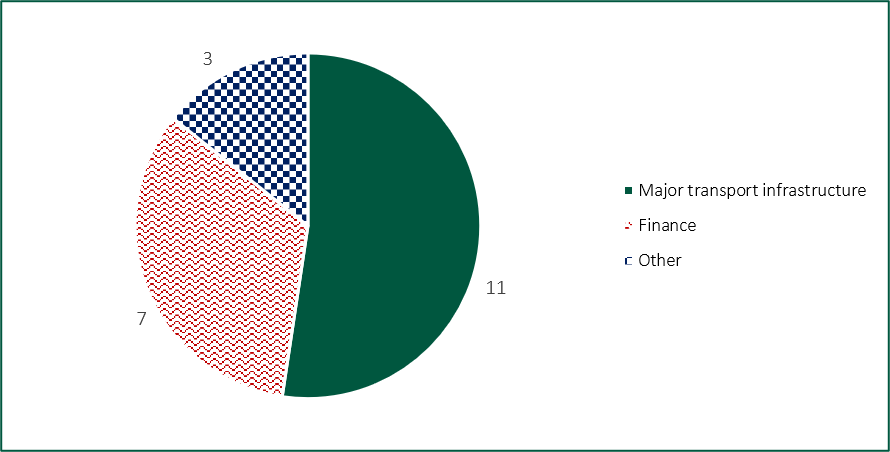
Eight requests were received from the Victorian Infrastructure Delivery Authority and six from the Victorian Funds Management Corporation. The other requests in 2025–26 were from entities operating in the energy, transport infrastructure, finance and water sectors.
In 2025, the Tribunal reiterated its advice that there is no longer a requirement for public sector employers to seek the Tribunal’s advice each time that they wish to increase the remuneration of an executive paid above the band by up to the Premier’s annual remuneration adjustment guideline rate. This may have reduced the number of requests for payment above the band advice received during the 2025–26 financial year.
2.4 State Budget performance measures
The Victorian Budget 2025–26 specifies one quality performance measure for the Tribunal (Department of Treasury and Finance (2025), Victorian Budget 2025–26 — 2025–26 Department Performance Statement, p. 157).
The quality measure relates to the satisfaction of key stakeholders — including MPs, public sector employers and councillors — with the Tribunal’s processes regarding determinations, reviews and advice.
To measure stakeholder satisfaction, a questionnaire was sent to approximately 480 stakeholders, including MPs, public sector employers and local government mayors and deputy mayors. The questionnaire asked respondents to rate their overall satisfaction with the Tribunal’s delivery of its outputs.
(note: The question asked was ‘Considering consultation methods, consideration of views and issues, communication of outcomes, and timeliness, how satisfied were you overall with the Tribunal's delivery of determinations, reviews and advice in 2025–26?’)
The Tribunal recorded an overall level of stakeholder satisfaction of 90 per cent against a target of 80 per cent, based on 87 responses to the questionnaire. This higher result may have been influenced by earlier publication of annual adjustment determinations in 2026, a higher response rate from local government stakeholders and the Tribunal’s work on the Allowance payable to Mayors, Deputy Mayors and Councillors (Victoria) Determination No. 01/2026.
3. Other Tribunal matters
3.1 Tribunal meetings
The Tribunal held 22 regular meetings and two special meetings in 2025–26.
Minutes were kept for each meeting. There were five disclosures relating to an interest by a Tribunal Member recorded in the minutes of a Tribunal meeting (VIRTIPS Act, ss. 12, 14(4)).
- On 4 September 2025, Member Wilson noted he had resigned from his role as Chair of the Transport Accident Commission.
- On 13 November 2025, Member Wilson disclosed that he had been asked to advise on the remuneration of the members of the First Peoples’ Assembly of Victoria.
- On 22 January 2026, Member Sussex declared her employment in the role of Deputy Chancellor of La Trobe University.
- On 30 April 2026, Member Gardner reported that she was no longer a member of the board of VicTrack.
- On 14 May 2026, Chair McCann declared that he had submitted his resignation from his role as Chair of the Judicial Entitlements Panel, effective 22 May 2026.
Member Sussex also recused herself from consideration of a payment above the band request received from Emergency Services & State Super (Advice 2026/07), due to her membership of that fund.
3.2 Finance
Section 45 of the Financial Management Act 1994 (Vic) (FMA) requires the Tribunal to prepare a report of operations and financial statements for each financial year. However, in accordance with a determination made by the Minister for Finance under section 53(1)(b) of the FMA, the Tribunal’s report of operations and financial statements is consolidated with the annual report of the Department of Treasury and Finance (DTF).
Under section 8(3)(d) of the FMA, and Standing Direction 1.5, the Minister for Finance has also exempted the Tribunal from the requirements of the Standing Directions.
While the exemption has been provided on an ongoing basis, it is subject to the Tribunal confirming with the Executive Director, Budget Strategy, DTF, prior to the end of May each year, that:
- the Tribunal has established and maintained alternative arrangements to ensure that no aspect of financial governance is compromised
- there has not been any significant change to the Tribunal’s risk profile and functions
- there has not been any key audit finding that might suggest deficiencies in the Tribunal’s financial management and internal control systems.
The Tribunal Chair, as the Accountable Officer for the Tribunal, provided this confirmation for the 2025–26 financial year.
3.3 Freedom of information requests
The Tribunal did not receive any freedom of information requests in 2025–26.
4. Office of the Compliance Officer
The VIRTIPS Act establishes an office of the Compliance Officer, which is attached to the Tribunal and supported by the Tribunal Secretariat (VIRTIPS Act, s. 27).
A report on the performance of the function of the Compliance Officer must be included in the Tribunal’s annual report (VIRTIPS Act, s. 40(h).).
The Compliance Officer’s functions and powers are specified in the VIRTIPS Act and the Parliamentary Salaries, Allowances and Superannuation Act 1968 (Vic) (note: These functions are performed by the primary Compliance Officer or, if they are not available or otherwise unable to hear an appeal, by the secondary Compliance Officer, VIRTIPS Act, s. 28(4)). The Compliance Officer is responsible for independently hearing and determining appeals from:
- MPs in relation to a decision by the relevant Officer to reject a claim for a work‑related parliamentary allowance or the EO&C Budget
- former MPs in relation to a decision made by a Clerk of the Parliament regarding their entitlement to receive the separation payment.
The Compliance Officer (VIRTIPS Act, ss. 28, 35):
- is not subject to the direction or control of any person, including the Minister
- is not bound by the rules of evidence
- must conduct proceedings expeditiously, and with as little formality as considered appropriate
- may publish a statement of findings, and any required actions, on the Tribunal’s website, which is absolutely privileged.
4.1 Compliance Officers
Peter Lewinsky AM
Mr Lewinsky is the primary Compliance Officer, appointed to the role on 16 March 2022 for a period of five years.
Mr Lewinsky is an experienced board and audit committee chair and member with a broad portfolio over 25 years covering private and ASX-listed companies and the government sector in a wide range of business areas and professional disciplines. He has extensive experience in financial management, internal and external audit, risk and compliance, governance, strategic decision making and the provision of advice to board chairs, department secretaries and leaders of a range of organisations.
Mr Lewinsky is a Fellow of the Institute of Chartered Accountants in Australia and New Zealand and a Fellow of the Australian Institute of Company Directors. He has a Bachelor of Economics (Monash University) with an accounting major and a Master of Business Administration degree (University of Melbourne) with a major in finance.
Rachel Thomson
Ms Thomson was appointed to the role of secondary Compliance Officer on 28 January 2026 for a period of five years.
Ms Thomson is an experienced non-executive director and audit and risk committee chair with extensive commercial and public sector board experience.
In addition to her board roles, Ms Thomson serves as an independent audit and risk committee member across several government departments and agencies.
Ms Thomson brings a strong executive background in financial services and risk management, having previously managed a profit centre reporting directly to the CEO at a general insurer. Ms Thomson holds a Bachelor of Science degree (majoring in mathematics) from the University of Melbourne and is a Fellow of the Australian Institute of Company Directors.
4.2 Report on the function of the Compliance Officer
Along with a report on the function of the Compliance Officer, the Tribunal’s annual report is required to contain details of specific information sought, and appeals heard by the Compliance Officer. These details are summarised in Table 4.1.
The Compliance Officer (either primary or secondary) did not receive any appeals in 2025–26.
Table 4.1: Details of specific aspects of the Compliance Officer's activities in 2025-26
| Function - Separation payment | |
|---|---|
VIRTIPS Act, s. 40(d) Number of MPs who have not complied with requests for further information by the Compliance Officer in relation to determinations about separation payments | 0 |
VIRTIPS Act, s. 40(e) Number of appeals heard in relation to separation payments | 0 |
| Function - Work-related parliamentary allowances and the EO&C Budget | |
|---|---|
VIRTIPS Act, s. 40(f) Number of MPs who have not complied with requests for further information in relation to appeals relating to work-related parliamentary allowances and the EO&C Budget | 0 |
VIRTIPS Act, s. 40(g) Number of appeals heard in relation to work-related parliamentary allowances and the EO&C Budget | 0 |